
By MONTE INTELLIGENCE Engineering Team | Technical Review by Helen Xu, Senior Metallurgical Engineer
When a Malaysian steel recycler switched from a coke-fired cupola to a 3-ton medium frequency induction melting furnace in early 2025, the numbers convinced the board to retrofit the second line within six months. Electricity consumption for the melting step dropped 28% in the first quarter. Tap-to-tap time went from 90 minutes to under 45.
That facility is not unusual. Across Southeast Asia, the Middle East, and parts of Eastern Europe, medium frequency induction melting technology is reshaping how foundries and recycling operations approach metal production. The shift is driven by hard economics: rising energy prices, tightening emissions standards, and a scrap metal supply chain that demands more flexible melting solutions.
This guide covers what buyers actually need to know before investing in a medium frequency induction melting furnace — the engineering and financial details, not the marketing version.
What Is a Medium Frequency Induction Melting Furnace?
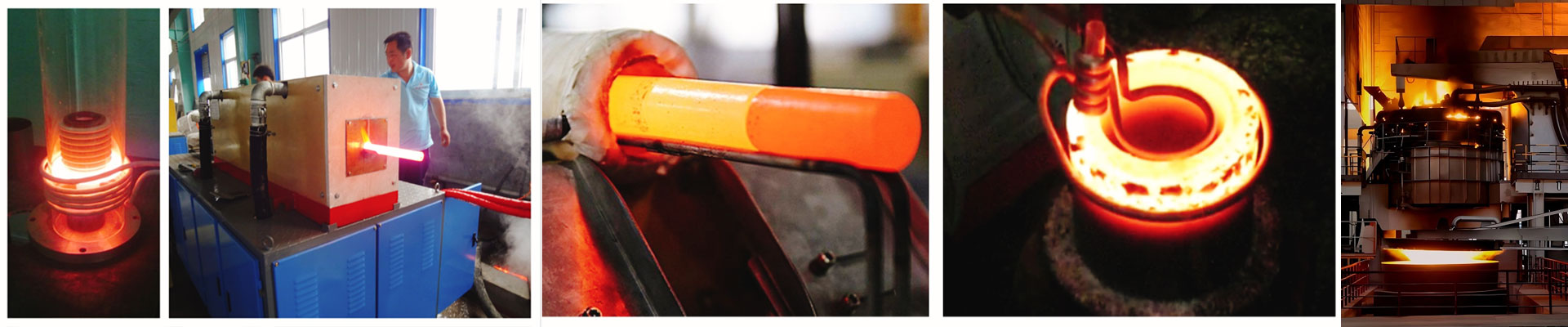
A medium frequency induction melting furnace generates heat directly within the metal charge using electromagnetic induction. The power supply converts grid electricity into alternating current at frequencies between 100 Hz and 10,000 Hz. This current flows through a water-cooled copper coil surrounding a refractory-lined crucible, creating a rapidly oscillating magnetic field.
The "medium frequency" designation matters. It occupies the practical middle ground between power density and melt quality. Mains-frequency (50–60 Hz) systems produce deeper stirring but slower initial heating. High-frequency systems (above 10 kHz) heat thin materials efficiently but struggle with bulk steel or iron melting. Medium frequency delivers rapid heat-up with controllable stirring action, which is why it dominates industrial-scale ferrous and non-ferrous melting applications.
The operating cycle follows four stages: charging scrap or ingots into the crucible; applying power and allowing the electromagnetic field to heat the charge from within; melting and refining with controllable electromagnetic stirring that homogenizes temperature and composition; and tapping via hydraulic tilt mechanisms with pour rates accurate to within 2% of target weight. A complete tap-to-tap cycle for a 1-ton steel melt typically runs 60 to 75 minutes under normal operating conditions.
The Real Cost Picture
Most equipment specification sheets lead with power capacity and melting rate. Those numbers matter, but they are not what determines whether an installation actually delivers return on investment over a five- or ten-year period.
A 1-ton medium frequency induction melting system with power supply, furnace body, cooling system, and basic automation typically ranges from USD 50,000 to 85,000. A 5-ton system with full automation, hydraulic charging, and fume extraction falls between USD 200,000 and 380,000. A 10-ton or larger installation, including civil works and electrical infrastructure upgrades, commonly reaches USD 550,000 to 1,200,000.
For operating costs, electricity typically accounts for 55–65% of total operating expense, at a real-world consumption rate of 550–650 kWh per ton of steel. Refractory maintenance (crucible relining every 80–120 heats) accounts for 12–18%. Modern IGBT-based power supplies achieve 92–95% efficiency, compared to 85–90% for older SCR designs, and the efficiency difference can offset the higher upfront cost of IGBT systems within 18–36 months in commercial power environments.
Suppliers routinely cite ideal laboratory conditions: 520 kWh per ton for steel melting, for instance. Real-world figures in continuous production typically run 10–25% higher depending on charge material variability, heat losses during delays, and cooling system electrical load. A well-managed foundry achieving 600–650 kWh per ton for steel is performing within a realistic, respectable range.
Key Applications
Steel Scrap Recycling is the fastest-growing application segment globally. The economics are straightforward: processed scrap steel typically costs 40–60% less than virgin pig iron, and induction melting processes it with lower direct emissions than electric arc furnaces using the same feedstock. A Thai steel service center operating two 5-ton induction furnaces reported processing approximately 28,000 tons of scrap annually with an average energy cost of USD 41 per ton of melted steel.
Foundry and Casting Operations benefit from rapid alloy changeover without cross-contamination risk — a complete drain and reline cycle takes 2–3 hours versus a full shift or more for EAF refractory conditioning. Non-ferrous Metal Melting (aluminum, copper, brass, zinc alloys) responds well when the operating frequency is properly matched to the material's electrical properties.
MONTE INTELLIGENCE: Engineering Solutions for Industrial Melting and Heat Treatment
MONTE INTELLIGENCE (洛阳蒙特智能科技有限公司) has been designing, manufacturing, and commissioning industrial furnace systems from our engineering center in Luoyang, China for over a decade. Our medium frequency induction melting furnace product line covers 100 kg to 30-ton nominal capacities with both IGBT and SCR power supply options.
Our engineering approach prioritizes total cost of ownership over the equipment's service life, not just the purchase price. Every system design begins with a structured analysis of the customer's specific production requirements before we recommend a configuration. This is not a catalog business where one size is presented as suitable for every application.
Các công trình lắp đặt gần đây bao gồm hệ thống nấu chảy thép 5 tấn cho một nhà máy sản xuất linh kiện ô tô ở Thổ Nhĩ Kỳ, hệ thống nấu chảy nhôm 2 tấn cho một xưởng đúc khuôn ở Indonesia và hệ thống tái chế phế liệu 10 tấn cho một trung tâm dịch vụ thép ở Ả Rập Xê Út.
Các thiết bị liên quan mà chúng tôi sản xuất bao gồm:lò hồ quang điệncho sản xuất thép năng suất cao vàlò xử lý nhiệt băng tải lướiDùng cho quá trình xử lý nhiệt liên tục các loại ốc vít, vòng bi và linh kiện ô tô.
Tài liệu miễn phí: Công cụ tính toán lợi tức đầu tư (ROI) cho lò nung cảm ứng
Trước khi đưa ra bất kỳ quyết định mua hàng nào, chúng tôi khuyên bạn nên chạy thử các con số thực tế thông qua một phân tích có cấu trúc, minh bạch về các giả định. Chúng tôi đã phát triển một bảng tính tính toán ROI toàn diện và danh sách kiểm tra thông số kỹ thuật thiết bị.
Đăng ký nhận bản sao miễn phí của bạn:Gửi email tớihelenxu@cnlymonte.comVới tiêu đề email là "Yêu cầu tính toán lợi tức đầu tư (ROI) lò nung cảm ứng miễn phí", chúng tôi sẽ gửi cả hai tài liệu trong vòng 24 giờ.
Câu hỏi thường gặp
Tuổi thọ sử dụng điển hình là bao lâu?Nếu được bảo trì đúng cách, các bộ phận cấu trúc của lò nung có thể sử dụng được từ 15 đến 20 năm. Các linh kiện điện tử của bộ nguồn thường cần được tân trang lại sau mỗi 8 đến 12 năm.
Một lò nung có thể xử lý cả việc nấu chảy kim loại đen và kim loại màu cùng lúc không?Về mặt kỹ thuật thì có, nhưng điều đó đòi hỏi phải xả hết chất lỏng trong nồi nấu kim loại, lót lại toàn bộ nồi và điều chỉnh tần số. Hầu hết các hoạt động đều sử dụng lò nung chuyên dụng cho từng nhóm vật liệu.
Cần nguồn điện loại nào?Hầu hết các hệ thống trên 500 kW yêu cầu nguồn điện ba pha 380V hoặc 415V. Các hệ thống công suất cao hơn có thể yêu cầu nguồn điện trung thế với máy biến áp hạ áp chuyên dụng.
Bắt đầu
Nếu bạn đang đánh giá công nghệ nấu chảy cảm ứng cho hoạt động của mình, bước tiếp theo hiệu quả nhất là thảo luận các yêu cầu cụ thể của bạn với một nhóm kỹ sư có kinh nghiệm thực tế trong nhiều ứng dụng và môi trường hoạt động khác nhau.
MONTE INTELLIGENCE cung cấp dịch vụ tư vấn kỹ thuật miễn phí, bao gồm ước tính sơ bộ về kích thước hệ thống và mức tiêu thụ năng lượng dựa trên nguyên liệu đầu vào thực tế và mục tiêu sản xuất của bạn.
Liên hệ với đội ngũ kỹ thuật của chúng tôi: helenxu@cnlymonte.com
Hãy truy cập trang web của chúng tôi: www.cnlymonte.com
Về tác giả: Bài viết này được chuẩn bị bởi nhóm kỹ sư của MONTE INTELLIGENCE. Helen Xu, Kỹ sư luyện kim cao cấp, đã đóng góp phần đánh giá kỹ thuật và phân tích trường hợp ứng dụng, dựa trên 12 năm kinh nghiệm trong thiết kế lò công nghiệp, vận hành thử và tư vấn vận hành xưởng đúc tại hơn 30 quốc gia.